

What defines a great travel destination has never stayed the same. As the tourism industry continues to evolve, so too do the spaces that cater to travelers from around the world. One of the most notable developments in recent decades is the emergence of the integrated resort—a concept that has quietly reshaped the way people engage with leisure, entertainment, and hospitality.
From major cities to coastal regions, these large-scale developments have become a fixture in tourism and entertainment-driven economies. Yet their growth wasn’t accidental. The integrated resort model is the result of decades of shifts in travel behavior, infrastructure planning, and destination strategy.
This article takes a closer look at how integrated resorts came to be, why the model works, and how it has been adapted, particularly in the Philippines as part of the country’s broader tourism development.
The Origins of the Integrated Resort Concept

The idea of combining hospitality, entertainment, and leisure into a single destination is not entirely new. Early versions of this concept appeared in resort towns where hotels offered basic recreational activities like spas and golf alongside accommodations. However, it wasn’t until the latter half of the 20th century that the integrated resort began to take shape as a formal development model. These early integrated resorts were built to maximize visitor engagement, offering not just a place to stay, but a comprehensive experience designed to make guests stay longer.
This shift coincided with the rise of experience-focused travel and the need for destinations to remain competitive in a changing global market. As the model gained traction internationally, it began to influence tourism development strategies, especially across Asia. In time, this would lay the foundation for the modern casino in the Philippines—a destination that brings together gaming, luxury accommodations, retail, dining, and events under one roof, reflecting the evolution of how leisure is consumed.
Why the Model Works
The appeal of the integrated resort lies in its ability to offer convenience, variety, and value within a single, purpose-built destination. For travelers, this means less time spent planning and navigating between locations and more time enjoying experiences. This all-in-one approach aligns with changing travel preferences, where visitors seek not only to relax but also to engage, explore, and be entertained without logistical complexity.
For cities and developers, integrated resorts also serve a strategic purpose. They allow for the concentration of tourism infrastructure in one area, streamlining development and creating economic efficiencies. Governments often see integrated resorts as catalysts for job creation and tourism-driven growth, especially when non-gaming elements such as convention centers and cultural venues are included. The result is a development model that meets the needs of modern tourism economies while creating more immersive, satisfying experiences for guests.
The Rise and Reinvention of Integrated Resorts in the Philippines
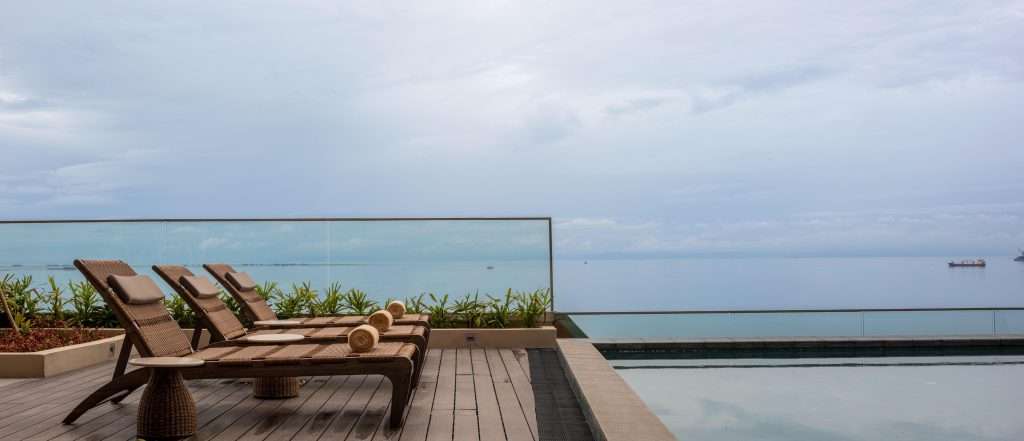
As the integrated resort model gained global traction, the Philippines emerged as a promising market for its expansion. The country’s growing tourism sector, rising middle class, and strategic location in Southeast Asia created the right conditions for large-scale, mixed-use developments. These resorts thus aligned well with the government’s broader goals of stimulating tourism, attracting foreign investment, and upgrading urban infrastructure. Over time, integrated resorts became key components in shaping how the Philippines positioned itself as a leisure and entertainment destination.
What sets the country’s approach apart is its effort to adapt the model to regional and cultural contexts. Developments are no longer just about offering familiar amenities. They also reflect local character, cater to diverse visitor profiles, and support community growth.
A prime example is NUSTAR Resort & Casino, a five-star integrated resort in Cebu that blends international design standards with Filipino identity. Its unique approach highlights the richness of Filipino lifestyle and culture, most notably through its homegrown Fili hotel brand, which embodies Filipino hospitality and craftsmanship. This focus on local heritage, alongside high-end retail, dining, gaming, and event spaces, reflects how integrated resorts in the Philippines are evolving not just in scale, but in how they connect with both local and international audiences.
The Future of Integrated Resorts
The integrated resort model continues to evolve alongside shifts in traveler expectations, technology, and destination planning. In the years ahead, resorts will likely place greater emphasis on sustainability, digital integration, and experience-driven design. From eco-conscious building practices to smart room technologies and personalized guest experiences, the focus will be on creating destinations that are both future-ready and deeply responsive to guest preferences.
At the same time, integrated resorts are expected to take on a more active role in shaping urban development and regional growth. By offering venues for conventions, exhibitions, and large-scale cultural events, these properties can support year-round tourism and strengthen a city’s global profile. As the competition among destinations intensifies, the ability of integrated resorts to adapt—while remaining rooted in local culture and context—will determine their long-term success.
The evolution of integrated resorts like NUSTAR signals that the Philippines is not only keeping pace with international trends, but also contributing to the redefinition of what integrated leisure destinations can and should be. It reflects more than just a response to global trends—it signals a deeper shift in how destinations are designed, experienced, and sustained. As the model continues to take root and evolve locally, it holds the potential to reshape the country’s tourism landscape in ways that are both economically impactful and culturally resonant.